
Sub-Total: $0.00
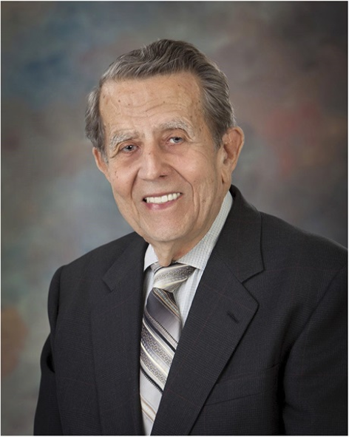
Dr. Augusto Sarmiento: Pioneer of Functional Fracture Care
Dr. Augusto Sarmiento (1927–2023) was one of the most influential orthopaedic surgeons of the twentieth century, a Colombian-born physician whose ideas transformed fracture care and helped advance joint replacement surgery in the United States. Born and educated in Colombia, he immigrated to the United States not long after receiving his medical degree. His early years there were difficult. He had to overcome a language barrier while also confronting prejudice toward physicians trained in Latin America. Rather than allowing those challenges to limit him, he turned them into a source of independence and intellectual strength. His outsider perspective gave him the confidence to question accepted orthopaedic practices and to search for better ways to treat patients.
After arriving in the United States, Dr. Sarmiento trained with major pioneers of hip surgery, including Austin Moore and Sir John Charnley. These experiences placed him at the center of a rapidly changing period in orthopaedics, when new ideas in reconstruction and prosthetic design were beginning to reshape surgical practice. At the University of Miami and Jackson Memorial Hospital, he helped build what became a major center for orthopaedics and rehabilitation. He helped found the Department of Orthopedics and Rehabilitation, became its first chair, and established the total joint service at Jackson Memorial Hospital. In Florida, he was the first to use bone cement in hip arthroplasty and also helped develop an early titanium hip prosthesis, demonstrating that his work extended beyond fracture care to major advances in reconstructive surgery.
Dr. Sarmiento’s most enduring achievement was the development of functional fracture bracing, often known as the Sarmiento Method. At a time when fractures were commonly treated with prolonged rigid immobilization, he demonstrated that carefully controlled motion and progressive weight-bearing could improve healing while preserving mobility. His braces stabilized the fracture while freeing the adjacent joints, reducing stiffness, limiting muscle wasting, and encouraging osteogenesis. This approach reshaped the treatment of diaphyseal fractures and became one of the most influential contributions to modern nonoperative orthopaedic care. Dr. Sarmiento himself regarded this research on fracture healing and functionally controlled motion as the most important work of his career.
Beyond his scientific work, Dr. Sarmiento became a major academic leader and teacher. He later served as professor and chairman of orthopaedics at the University of Southern California and helped train generations of surgeons through his writing, lectures, and demanding standards of inquiry. He was a founding member of The Hip Society and served as its president from 1976 to 1978. In 1991, he was elected president of the American Academy of Orthopaedic Surgeons, becoming the first Colombian to hold that office. Those positions reflected not only his authority as a surgeon, but also his reputation as an independent thinker who challenged complacency and insisted that orthopaedics remain grounded in science, discipline, and patient welfare.
Over the course of his career, Dr. Sarmiento published nearly 500 peer-reviewed papers and authored 27 books. Two books are especially significant. Functional Fracture Bracing,
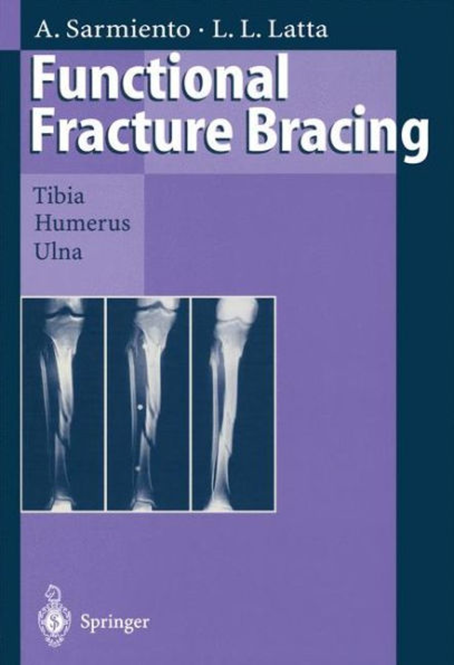
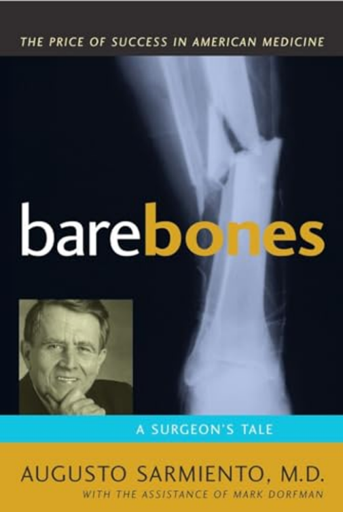
written with Loren L. Latta, reflects their collaborative work in developing and explaining the principles of functional fracture care, a method that helped change fracture treatment around the world. Bare Bones: A Surgeon’s Tale, his memoir, offers a more personal account of his life, training, professional struggles, and rise as an immigrant physician in American orthopaedics. Together, these books represent both sides of his legacy: the scientific innovator and the reflective physician whose career was shaped by persistence, originality, and conviction.
Dr. Sarmiento received many honors during his lifetime, including the Kappa Delta Award, the Nicolas Andry Award, the John Charnley Award, the Elmer Nix Ethics Award, and Colombia’s Orden de Boyacá, the nation’s highest civilian distinction. Yet his enduring importance lies not only in his titles and awards, but in the way he changed orthopaedic thinking. He showed that innovation could come from questioning accepted practice, that careful observation could be as powerful as technology, and that the best treatment was the one that preserved both healing and function. Today he is remembered as a surgeon, educator, and medical leader whose work continues to influence orthopaedic care throughout the world.