Sub-Total: $0.00
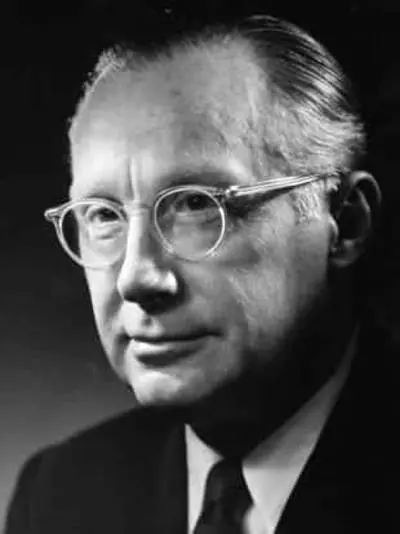
Dr. Walter P. Blount: Developer of the Milwaukee Brace
Dr. Walter P. Blount was the key investigator behind the Milwaukee brace, one of the most important orthopedic advances of the twentieth century. Born on July 3, 1900, he came from a family of physicians and continued that tradition by attending the University of Wisconsin School of Medicine. After medical school, he completed postgraduate orthopedic training in London and visited clinics across Europe before joining Dr. Frederick Gaenslen’s orthopedic practice in Milwaukee. This background helped prepare Blount to become Chief of Milwaukee Children’s Hospital and to focus his career on children with new, growth, and spinal problems.
The Development of the Milwaukee Brace
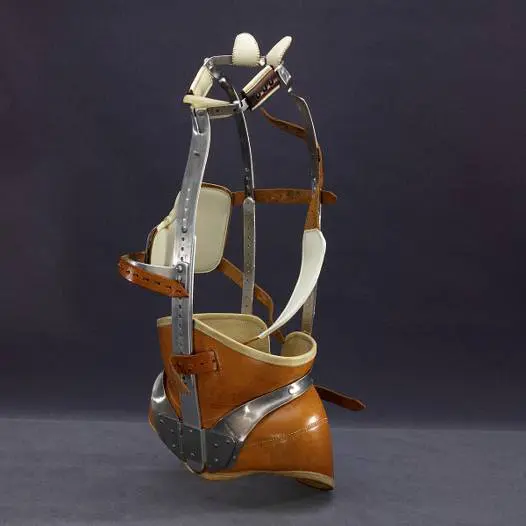
The brace grew out of the medical challenges created by polio. Many polio patients developed muscle weakness and spinal deformities, and postoperative care often relied on heavy plaster casts that were restrictive and difficult to tolerate. Blount wanted a better way to support the spine, especially for children recovering from polio-related spinal problems. His work in Milwaukee with Albert C. Schmidt, an orthotist, led to the design of the Milwaukee brace, which used a pelvic section, upright metal bars, corrective pads, and a neck ring to guide spinal alignment.
A Breakthrough in Non-Surgical Scoliosis Treatment
Blount’s most important insight was that the brace could do more than protect patients after surgery. As he studied its effects, he recognized that carefully applied external pressure could slow or correct the progression of spinal curves in growing children and adolescents. This made the Milwaukee brace a major non-surgical treatment for adolescent idiopathic scoliosis. For many patients, it offered a way to avoid or delay major surgery, especially when spinal curves were still moderate and the skeleton was still developing.
Lasting Impact on Orthopedic Care
The Milwaukee brace was not easy to wear, and its visible neck ring made daily life difficult for many young patients. Even so, its impact was enormous. It proved that scoliosis could often be managed by guiding the growth of the spine rather than immediately operating on it. Later braces improved comfort and appearance, but they built on the principles that Dr. Blount helped establish. His leadership also reached beyond the brace: he served as president of the American Academy of Orthopaedic Surgeons and as president of the Scoliosis Research Society. Dr. Walter P. Blount died on May 16, 1992, but his influence continued through the Milwaukee brace and through modern orthopedic approaches to spinal deformity.