Sub-Total: $0.00

Dr. Ignacio Ponseti - Pioneer of modern clubfoot care
Ignacio Ponseti (3 June 1914 – 18 October 2009), also known as Ignasi Ponsetí i Vives, was a Spanish-American orthopedic physician best known for developing the Ponseti Method, a groundbreaking nonsurgical treatment for congenital clubfoot. Born in Menorca, Spain, he was the son of a watchmaker and developed the precision and manual skill that later shaped his medical work. After serving as a medic during the Spanish Civil War, he left Spain and eventually joined the University of Iowa, where he spent much of his career treating patients, training physicians, and advancing orthopedic research.
Biography
Ponseti studied medicine at the University of Barcelona and graduated in 1936, just as the Spanish Civil War began. He served as a medical officer with the Loyalists, treating fractures and battlefield injuries—experience that set him on a path toward orthopedics. After escaping to France, he moved to Mexico, practiced family medicine for two years, and then traveled to Iowa in 1941 to study orthopedics under Dr. Arthur Steindler. He completed his residency in 1944 and joined the orthopedic faculty at the University of Iowa Hospitals and Clinics.
In the 1950s, Ponseti developed a nonsurgical approach to correcting clubfoot. His method uses gentle manipulation, serial plaster casts, a heel-cord tenotomy when needed, and bracing to guide the foot into proper alignment. At the time, surgery was common, but Ponseti found that many surgical patients later experienced stiffness, pain, arthritis, and limited mobility. His technique offered a less invasive alternative and eventually became the gold standard for clubfoot treatment worldwide.
The Ponseti Method
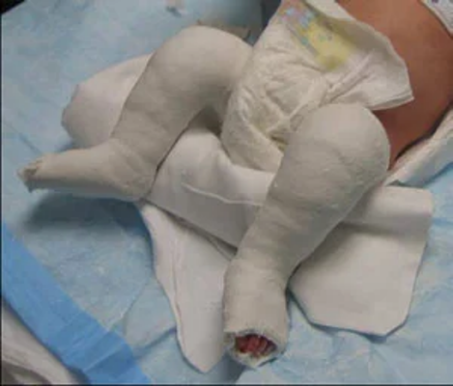
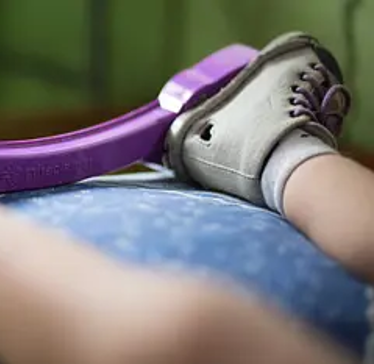
The Ponseti Method treats clubfoot through careful, repeated repositioning of the foot followed by toe-to-groin plaster casts that are changed weekly. Once the foot is corrected, an abduction brace helps maintain alignment and reduce the risk of recurrence. When properly applied by trained providers, the method gives most children excellent or good long-term outcomes and helps them walk with improved comfort and function.
Compared with surgery, the Ponseti Method is less expensive, produces better long-term mobility for many patients, and can be taught to trained nonphysician health care providers. This makes it especially valuable in regions with limited access to orthopedic surgeons. The approach has been adopted internationally and supported by organizations that expand clubfoot treatment, education, and research.
Research and Legacy
Beyond clubfoot treatment, Ponseti researched congenital and developmental bone and joint disorders, skeletal growth disorders in children, cartilage biochemistry, idiopathic scoliosis, and long-term outcomes for hip dislocation, clubfoot, and scoliosis treatments. He continued seeing patients and training physicians into his nineties, helping spread his method around the world.
Ponseti’s influence continued through colleagues such as Dr. Jose Morcuende at the University of Iowa and through the Ponseti International Association for the Advancement of Clubfoot Treatment, founded in 2006 to improve education, research, and access to care. His work has helped tens of thousands of children avoid major surgery and live with less pain and disability.