Sub-Total: $0.00
M.E. “Bill” Miller and the Evolution of the Boston Brace
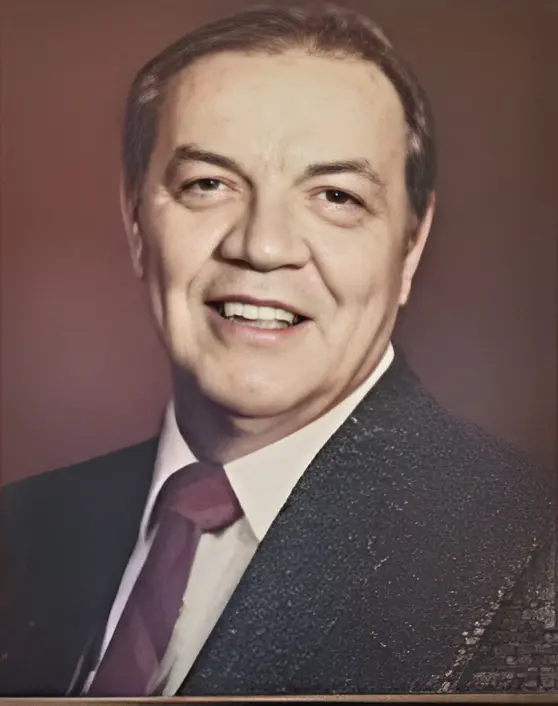
M.E. “Bill” Miller was born in 1927 and died in 1992. He was a pioneering certified orthotist-prosthetist who helped change the way scoliosis was treated without surgery. He first built his reputation in Indianapolis, Indiana, where he worked in a hands-on era of orthotics that relied on metal, leather, plaster, and custom fitting. His interest in lighter plastics and more repeatable brace designs eventually led him to Boston Children’s Hospital, where he worked with Dr. John E. Hall to develop the Boston Brace.
The Boston Brace
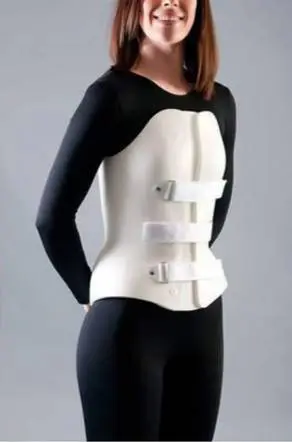
The Boston Brace was a major step forward because it replaced the bulky upper metal framework of earlier braces with a lower-profile thermoplastic TLSO, or thoraco-lumbo-sacral orthosis. The brace used a prefabricated plastic module that could be trimmed, padded, and adjusted for each patient’s curve. Its design controlled the pelvis, flattened the lumbar spine when needed, and used carefully placed pressure areas and relief spaces to guide the spine toward better alignment.
Miller’s great contribution was both mechanical and practical: he helped make spinal bracing more effective, more consistent, and easier for young patients to tolerate under clothing. That improved wearability mattered because a scoliosis brace only works when a patient can actually live in it and wear it as prescribed.
Physical Supports
Physical Supports became a shorter but important extension of Miller’s work. With Miller’s endorsement and ownership behind it, and with people such as Dave LaFrance and Shannon Schwinn involved, it served as a resource beyond the Boston Brace program inside the hospital—helping produce and support Boston-type plastic modules, components, and fabrication methods for outside orthotists and clinics.
Its purpose was to make Miller’s brace concepts more accessible: reliable plastic foundations could be supplied, then customized by skilled orthotists for individual patients. In that sense, Physical Supports helped carry the Boston-style approach beyond one hospital setting and into broader clinical use.
A Lasting Legacy
Miller’s legacy is the combination of invention, patient care, and practical manufacturing. He helped turn scoliosis bracing into a team process involving the physician, orthotist, physical therapist, patient, and family, while also creating a brace system that could be taught, reproduced, and improved over time.
Modern Boston-style braces, including digitally designed versions, still reflect Miller’s core insight: a brace must be strong enough to guide the spine, precise enough to match the individual curve, and wearable enough for real daily life.